Yes, linen can be worn in autumn too. Look beyond the lightweight holiday shirt: a linen safari jacket, tailored trousers in a more substantial fabric, a scarf or a linen knit all have a place in a transitional wardrobe. The key lies in the cut, the construction of the fabric and the clothes you pair with each piece.
In September and October, a day can begin with a chill, turn mild by midday and feel crisp again in the evening. That is exactly when linen deserves to stay in your wardrobe. Wear it in layers, choose fabrics of an appropriate weight and enjoy its distinctive feel without expecting a summer shirt to do the job of a coat.
Why do we still associate linen with summer?
It is easy to see why. Loose linen shirts, pale colours and lightweight trousers have long been favourites in hot weather. Linen fibre is valued for its breathability and the way it handles moisture. Yet the look and feel of a garment also depend on the yarn, whether the fabric is knitted or woven, its weight and its finish. “Linen” does not describe a single fabric thickness.
An airy linen voile and a dense linen cloth have different drapes and different uses. Likewise, a fine jersey and a heavier knit feel quite different to wear. In autumn, there is no need to recreate a midsummer outfit. Choose shapes and fabrics that suit the temperature on the day.
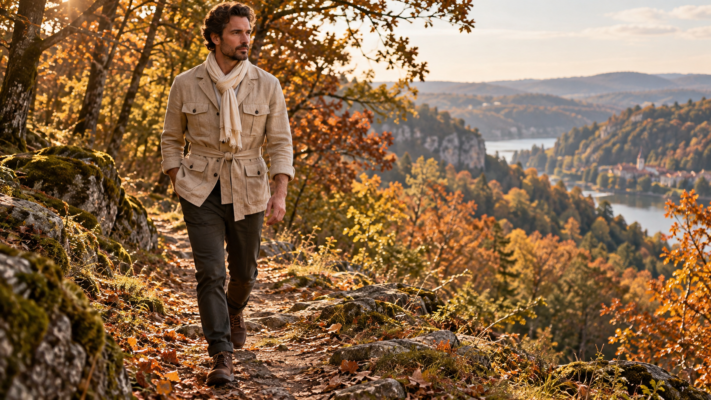
A linen safari jacket for fine autumn days
A safari jacket strikes a balance between relaxed style and a smart appearance. Its pockets, structured shape and lightweight jacket feel make it well suited to those sunny days of early autumn. Wear it for a walk, a trip into town or a coffee on a terrace, then fasten it as the warmth of the evening begins to fade.
In linen, it can be worn over a T-shirt, polo shirt or regular shirt. Pair it with dark denim and leather shoes for a simple, polished outfit. With tailored trousers, it looks smarter without becoming stiff. Sand recalls the classic safari jacket, while khaki, tobacco brown or navy sit comfortably in an autumn palette.
Pay attention to the body of the fabric when choosing one. A very light cloth may feel more like a summer overshirt; a more substantial construction gives the jacket greater presence. On colder evenings, add a light knit underneath or switch to a suitable coat: a safari jacket remains a transitional piece.
Tailored linen trousers beyond summer
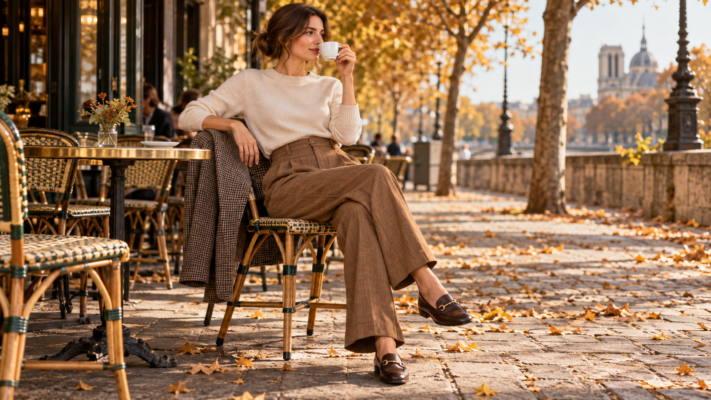
Tailored trousers show that linen can look elegant without bringing holidays to mind. Front pleats create volume and a clean line, while a more substantial fabric than you would choose for summer improves the drape. The cut matters as much as the material: a straight or slightly relaxed leg lets the fabric move and works well with layers on top.
For autumn, consider a medium-weight or heavier linen fabric, depending on the design, and ask the manufacturer for its exact weight. This figure, expressed in grams per square metre, helps you compare fabrics, but it cannot predict how warm a garment will feel on its own. A lining, a tighter weave, the cut and the other clothes you wear all make a difference.
Brown, navy or ecru linen trousers work with a shirt and cardigan, a wool jacket or a fine sweater. Closed shoes immediately make the outfit feel more seasonal. If rain is forecast, choose appropriate footwear and an outer layer too: linen is not waterproof.
A linen scarf when the air turns cooler
A linen scarf adds a light layer around the neck without the bulk of a heavy winter scarf. Loosely tied over a jacket or tucked beneath a light coat, it suits the changing temperatures of an autumn day. It is also an easy way to bring linen into an outfit when your main pieces are made from cotton or wool.
Choose the texture according to the look you want: soft linen for a relaxed feel, or a denser weave for more structure. Rust, olive or deep blue adds a seasonal accent, while light beige or ecru brightens darker clothes.
Covering your neck may make you feel more comfortable as the air cools. A scarf does not, however, prevent influenza, which is a viral infection. Public health advice on reducing transmission focuses, among other measures, on hygiene and vaccination where appropriate. The appeal of a linen scarf is its style and the comfort it offers, without any medical claim.
Linen knitwear for the return of cooler weather
We often think of woven linen, but linen fibre can also be knitted. That opens up interesting possibilities for autumn: the texture adds depth, the garment is easy to layer and the whole outfit gains character. A linen knit polo, worn over a T-shirt or under a jacket, works well on days that are still fairly mild.
The Roubaix-based brand Juin fait le Lin offers a pure linen polo-neck sweater, knitted in its own workshop. It is a practical example of linen designed for more than summer shirts. With tailored trousers and closed shoes, the polo collar gives a neat finish; with jeans and a safari jacket, the look stays relaxed. As temperatures fall, add suitable insulating layers.

How do you put together a linen outfit for autumn?
The simplest approach is to start with the weather and give each garment a job. A linen top brings its texture and comfortable feel; a cardigan or jacket adds warmth; an outer layer protects against wind or rain. You can then remove a layer at midday and put it back on in the evening.
For a mild day, try a linen knit polo, tailored trousers and an open safari jacket. For a smarter occasion, pair well-cut linen trousers with a shirt, a jacket and leather shoes. For a walk, a linen scarf may be all you need to complete an outfit already suited to the temperature. Fabrics work well together: linen with wool, denim or cotton creates appealing contrasts in texture.
Colour also helps move linen away from its seaside associations. Beige still has a place, especially alongside chocolate brown, deep green or grey. Navy works in every season. Linen’s characteristic creases are part of its appeal; a considered cut and a little attention to how the garment hangs keep the overall look polished.
From field to garment: the role of linen yarn
The plant goes through several stages of transformation before it becomes a garment. Once the fibres have been prepared, linen spinning produces linen yarn with characteristics suited to weaving or knitting. Designers then choose the fabric construction, weight, finish and cut. That is why two garments both labelled “linen” can perform quite differently in autumn.
At Safilin, this variety is central to our work as a spinner. Fibre selection and spinning methods help shape the options available to fabric and garment manufacturers. To learn more about these stages, explore linen preparation and spinning and the different uses of Safilin linen yarn. A good transitional garment begins long before it reaches the shop.
Frequently asked questions about wearing linen in autumn
Can you wear linen in autumn?
Yes. A safari jacket, trousers in a more substantial linen fabric, a scarf or a linen knit all work well in the transitional season. Adjust your layers to the weather.
Does linen keep you warm when it is cool outside?
Linen alone is no substitute for thick wool or a winter coat. Comfort depends on the fabric’s weight and construction, the cut and the layers worn with it.
How can you wear a linen shirt in autumn?
Wear it beneath a fine knit, cardigan or jacket. A lightweight shirt can still be useful on mild days, with an extra layer for the evening.
What kind of linen trousers should you choose for autumn?
Choose a more substantial fabric than you would for summer trousers and a cut that hangs well, such as straight-leg trousers with front pleats. Check the fabric weight and, above all, try them on.
What fabric weight is best for autumn linen?
There is no universal threshold. Compare the weight in g/m² of fabrics intended for the same use, then look at their weave, opacity, drape and any lining.
Can you wear linen in winter?
Yes, as part of a layered outfit. In cold weather, add insulating layers and appropriate outerwear; a thin linen garment will not be enough on its own.
How should you care for linen clothes?
Start with the garment’s care label: linings, dyes and finishes may require specific treatment. In general, avoid overloading the washing machine, choose a suitable gentle cycle and air-dry the garment if its label permits.
Does linen always crease?
Linen develops creases naturally as you wear it. How they look varies with the fabric and its finish. Hanging the garment after washing, then smoothing or pressing it if you wish, helps keep it looking neat.