Discreet yet essential, linen twine remains a key solution across numerous professional sectors. Used in food processing, agriculture, DIY, and domestic applications, linen twine combines strength, reliability, and the advantages of a natural fibre.
Safilin linen twines, manufactured from European flax, fully embody this technical requirement while enhancing the exceptional properties of flax.
Linen twine offers technical characteristics that explain its long-standing use in demanding environments.
European flax, a natural plant fibre, provides:
✔ High mechanical strength
✔ Excellent knot resistance
✔ Low elasticity
✔ Outstanding dimensional stability
Unlike synthetic alternatives, linen twine delivers performance and reliability without compromising material integrity.
European Flax: A Natural Fibre with Recognised Performance
Flax has long been recognised for its mechanical properties. European flax, particularly French flax, benefits from ideal climatic conditions that favour the production of high-quality long fibres.
Widely used in the manufacture of technical yarns, European flax also demonstrates its full potential in the production of linen twine:
-
Tensile strength
-
Knot resistance
-
Flexibility in use
-
Reliability under intensive conditions
Safilin linen twine is fully rooted in this textile and industrial tradition.
Linen Twine: Exceptional Versatility Across Applications
Thanks to the natural properties of flax, linen twine is suitable for a wide range of uses.
Linen Twine for Food Applications
In food-related professions, linen twine remains a reference solution:
-
Cured meats and charcuterie
-
Smoking and drying processes
-
Butchery and meat preparation
-
Culinary tying
-
Professional kitchens
Safilin linen twines can be supplied as food-contact compliant, in accordance with:
👉 Regulation (EC) No 1935/2004
This regulatory framework ensures the safety of materials intended to come into contact with food products.
Linen Twine for Agricultural and Horticultural Uses
European flax, a biodegradable fibre, perfectly meets agricultural requirements:
✔ Plant support and trellising
✔ Plant fixation
✔ Agricultural packaging
Choosing linen twine means selecting a material derived from a renewable plant-based fibre, consistent with sustainable agricultural practices and the growing recognition of European flax.
Linen Twine for Domestic Applications
In domestic environments, linen twine is widely valued for:
-
Gardening
-
Cooking
-
Creative hobbies
-
Packaging
-
Decorative uses
The natural texture of flax supports the preference for durable and authentic materials.
Linen Twine for Technical and DIY Applications
Linen twine is also used for:
✔ Light fastening
✔ Packaging
✔ Craftsmanship
✔ Specific technical uses
The inherent strength of European flax ensures reliable mechanical performance.
Performance of Safilin Linen Twine

Safilin linen twines are designed to meet diverse operational constraints.
✔ Knot Resistance
A fundamental requirement, knot resistance ensures:
-
Reliability
-
Safety
-
Stability
Linen twine maintains its mechanical integrity even under repeated handling.
✔ Machine Tying Compatibility
Thanks to high-quality polishing, Safilin linen twine offers:
✔ Regular running behaviour
✔ Consistent tension
✔ Excellent compatibility with automated processes
The polished finish represents a major advantage for industrial applications.
A Comprehensive Range of Linen Twines
Safilin linen twines are available in multiple configurations.
Number of Plies
From 2 to 6 plies, allowing precise adjustment of:
✔ Strength
✔ Stability
✔ Handling properties
Available Counts (NM)
-
NM 2
-
NM 2.5
-
NM 3.5
-
NM 4.5
Each linen twine can be tailored to specific performance requirements.
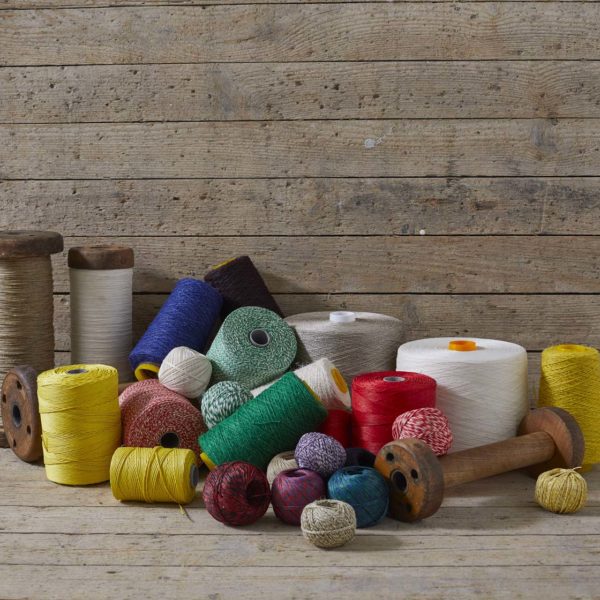
Available Colours
Natural ecru, bleached ecru, white, red, blue, yellow, green, black.
Linen twine thus also serves identification and differentiation purposes.
Finishes
✔ Polished linen twine
✔ Unpolished linen twine
Presentation Formats
Safilin linen twines are supplied in:
-
100 g balls
-
200 g balls
-
1 kg rolls
This flexibility supports both professional and industrial usage.
Linen Twine and Environmental Responsibility
Linen twine naturally aligns with responsible material selection.
European flax is:
✔ A renewable natural fibre
✔ Biodegradable
✔ Derived from low-impact cultivation
Safilin twines benefit from the:
Guaranteeing:
-
European origin of flax
-
Full traceability
-
High industrial standards
Linen twine therefore represents both a technical and environmental choice.
Conclusion: Linen Twine as a Technical and Sustainable Solution
Versatile, strong, and reliable, Safilin linen twine highlights the continued relevance of European flax across a wide variety of applications.
In a context where material choices are increasingly strategic, linen twine stands out as a solution that is:
✔ Reliable
✔ High-performing
✔ Responsible
Why use linen twine ?
Linen twine offers excellent mechanical strength, outstanding knot resistance, and represents a natural alternative to synthetic twines.
Is linen twine suitable for food contact ?
Yes, certain linen twines can be supplied in compliance with Regulation (EC) No 1935/2004 relating to materials intended to come into contact with food.
What are the advantages of European flax ?
European flax, particularly French flax, is recognised for fibre quality, full traceability, and its low environmental impact.
Which linen twine should be chosen for machine use ?
Polished linen twine is recommended for machine tying due to its smooth running behaviour and excellent process stability.