Linen yarn holds a unique position within the textile world. Both technical and natural, and deeply rooted in European industrial history, it forms the invisible foundation of many fabrics, yarns, and high value-added applications. Behind its apparent simplicity lies a structured, demanding, and highly specialized supply chain, in which every stage—from flax cultivation to spinning—directly influences the final quality of the product.
Today, as brands and industrial players increasingly seek traceability, sustainability, and consistent quality, European linen yarn has established itself as a benchmark. Understanding its origin, its manufacturing process, and the role of the manufacturer makes it possible to distinguish a standard linen yarn from one produced through genuine industrial expertise
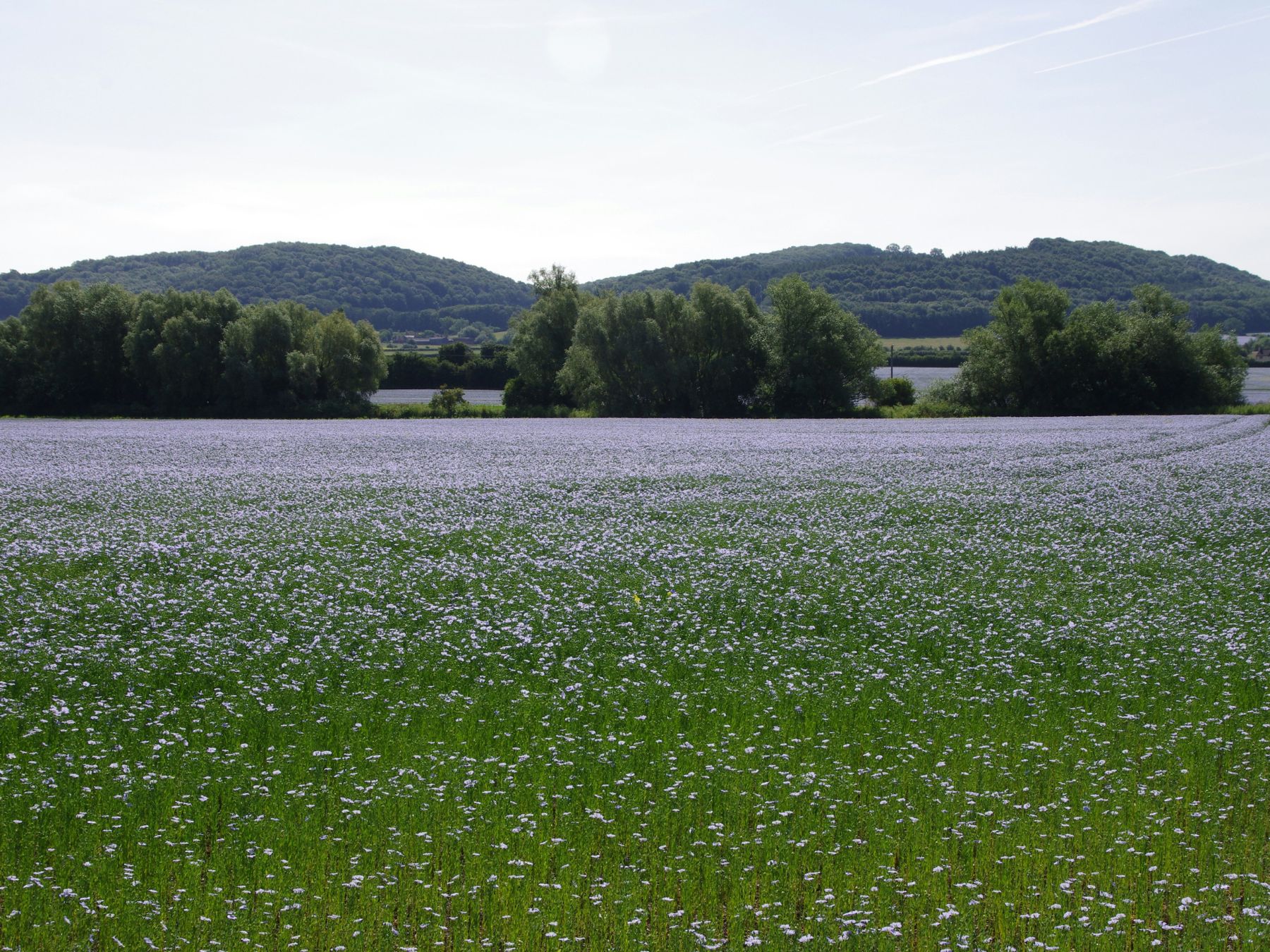
European flax: an exceptional raw material
The quality of linen yarn depends above all on the quality of the fiber itself. Western Europe concentrates unique soil and climate conditions that are particularly favorable to the cultivation of textile flax: fertile soils, a balanced alternation of rainfall and sunshine, and agricultural know-how passed down through generations.
This geographical specificity explains why European linen yarn enjoys international recognition. Fiber length, fineness, and strength form the essential foundation for producing yarns that are regular, high-performing, and suitable for the most demanding textile applications.
Mastery of the agricultural upstream stage is therefore a key element of any high-quality flax supply chain, ensuring a stable, traceable, and consistent raw material.
From fiber to yarn: the requirements of linen yarn manufacturing
The manufacturing of linen yarn is a complex process, very different from that of short or synthetic fibers. After harvesting and the initial stages of fiber preparation (retting, scutching, and combing), spinning becomes a decisive phase.
Transforming a long, natural fiber into a homogeneous yarn requires:
- an in-depth understanding of flax’s mechanical properties,
- precise control of spinning parameters,
- continuous adaptation to the natural variability of the raw material.
It is at this stage that yarn count regularity, strength, appearance, and suitability for weaving, knitting, or technical applications are determined. Linen yarn manufacturing allows no approximation; it relies on proven industrial expertise and specialized equipment.
The key role of the linen yarn manufacturer
Le fabricant de fil de lin occupe une position centrale dans la chaîne de valeur. Bien plus qu’un simple transformateur, il agit comme garant de la qualité, de la constance et de la performance du fil livré aux clients.
The linen yarn manufacturer occupies a central position in the value chain. Far more than a simple processor, the manufacturer acts as a guarantor of quality, consistency, and performance for the yarn supplied to customers.
Its role notably involves:
- selecting fibers best suited to the intended applications,
- defining spinning parameters according to end uses,
- ensuring long-term production consistency,
- supporting customers in their technical choices.
In a context where markets demand reliable, reproducible yarns that meet high standards, the manufacturer becomes a strategic partner. This industrial approach clearly distinguishes a specialized player from a simple intermediary.
Historic companies such as Safilin illustrate this European expertise, built over several generations of linen spinning.
Linen twine, textile yarn, and technical yarn: distinct uses
Behind the generic term “linen yarn” lie very different realities. Distinguishing between the main product categories is essential to understanding their uses.
Linen twine is generally thicker and more rustic. It is used for applications requiring strength and durability, such as packaging, agriculture, or certain industrial uses. Aesthetic regularity is secondary to mechanical resistance.
Textile linen yarn, by contrast, must meet much finer requirements: homogeneity, fineness, and predictable behavior during weaving or knitting. It is intended for fabrics used in apparel, home textiles, and furnishing.
Finally, some linen yarns are developed for technical applications, combining mechanical strength, stability, and specific natural properties. Each category implies distinct manufacturing choices, highlighting the importance of a manufacturer capable of mastering these variations.
Why European linen yarn is a global benchmark
The success of European linen yarn is based on several structuring factors. Geographic proximity between cultivation, processing, and spinning areas promotes full traceability and better quality control.
Added to this are:
- strict social and environmental standards,
- an industrial culture focused on durability,
- a strong capacity for continuous innovation.
Unlike more fragmented supply chains, the European model makes it possible to secure supplies and ensure consistent quality—an essential factor for international brands and industrial clients.
Linen yarn supplier: a partner rather than a service provider
Choosing a linen yarn supplier is no longer merely a matter of price or availability. Textile stakeholders today seek partners capable of supporting them over the long term.
A reliable supplier stands out through:
- its ability to guarantee consistent volumes,
- the stability of its technical characteristics,
- its support in developing new products,
- its transparency regarding origin and manufacturing.
This relationship of trust is particularly strategic for brands positioned in premium or responsible market segments.
Purchasing linen yarn : addressing today’s market challenges
The purchase of linen yarn is now part of a broader approach that integrates performance, sustainability, and brand image. Buyers expect yarns capable of meeting precise specifications while aligning with responsible sourcing strategies.
Rising environmental requirements further strengthen the appeal of flax, a naturally renewable fiber with low input needs. However, only properly manufactured linen yarn fully delivers on these benefits, both technically and from a marketing perspective.
Linen yarn: an industrial and sustainable choice
Au-delà de ses qualités esthétiques et mécaniques, le fil de lin incarne une vision durable du textile. Issu d’une plante intégralement valorisée, transformé au sein de filières structurées, il répond aux attentes contemporaines en matière de responsabilité et de transparence.
S’appuyer sur un fil de lin européen, produit par un fabricant spécialisé, revient à faire le choix d’un matériau fiable, traçable et porteur de sens. Dans un marché en quête de cohérence et de qualité, le fil de lin n’est plus seulement une matière première : il devient un véritable marqueur d’exigence industrielle.
FAQ – Linen yarn
What makes European linen yarn different?
European linen yarn stands out for the quality of its fiber, full traceability, and high manufacturing standards. The combination of favorable growing conditions and industrial expertise ensures consistent, high-performance yarns.
What is the difference between linen twine and textile linen yarn?
Linen twine is generally thicker and designed for strength and functional uses, such as packaging or agriculture. Textile linen yarn is finer, more regular, and intended for weaving or knitting fabrics for apparel and home textiles.
Why is the role of the linen yarn manufacturer essential?
The manufacturer ensures yarn consistency, performance, and suitability for specific applications. Through expertise in spinning and fiber selection, the manufacturer guarantees long-term quality and reliability.
Is linen yarn suitable for premium markets?
Yes. When produced under controlled conditions and with consistent quality, linen yarn is particularly well suited to premium and high-value textile applications.
How can a reliable linen yarn supplier be identified?
A reliable supplier demonstrates industrial expertise, transparency regarding origin and manufacturing, stable production capacity, and the ability to support clients over the long term.
Is linen yarn compatible with today’s environmental challenges?
Yes. Flax is a naturally renewable fiber with low environmental impact, especially when grown and processed in Europe. Linen yarn aligns well with sustainability and responsible sourcing strategies.
Conclusion
Linen yarn is the result of a delicate balance between nature, technology, and industrial expertise. Behind each bobbin lies an exceptional raw material, a demanding manufacturing process, and the decisive role of the manufacturer in ensuring quality and consistency.